
SPRING is the Artists' Easter Exhibition talent show with a handful of artists who in recent seasons have made a strong impact on the juried exhibition KP.
It is KP's board that selects the artists for SPRING.
The purpose of SPRING is
- to highlight significant artistic expressions and investigations that may otherwise have difficulty finding a public platform
- to support the individual artist in his/her career
- in a wider perspective, to strengthen the upcoming arts
SPRING has three major focus
- Care of talent: Early on in the process, the artists are assigned a qualified supervisor who advises on the individual works. Artists and supervisors collaborate on the overall exhibition and on the form and content of a catalogue.
- Exchange: A platform is created for new networks and collaborations artists in between.
- Communication: The relationship between works and the audience is developed by publishing catalogues, handouts, launching public talks, etc.
SPRING26 present works by
Laura Degn (participated at KP22 and KP24)
Peter Rolsted (participated at KP24)
Supervisor: Ahmad Siyar Qasimi
SPRING26 runs at the same time as KP26 in Kunsthal Aarhus 28 March to 17 May, 2026
SPRING26 artists
Laura Degn (participated at KP22 and KP24)
Peter Rolsted (participated at KP24)
Supervisor: Ahmad Siyar Qasimi
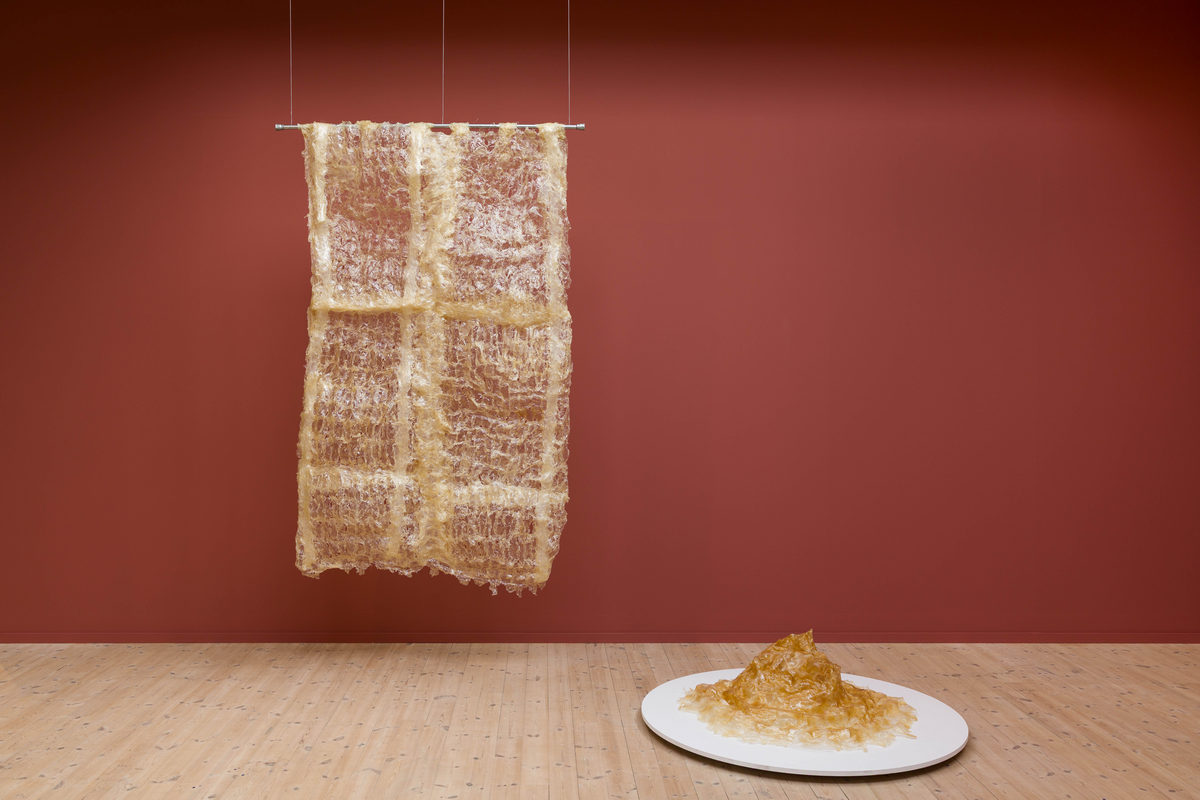
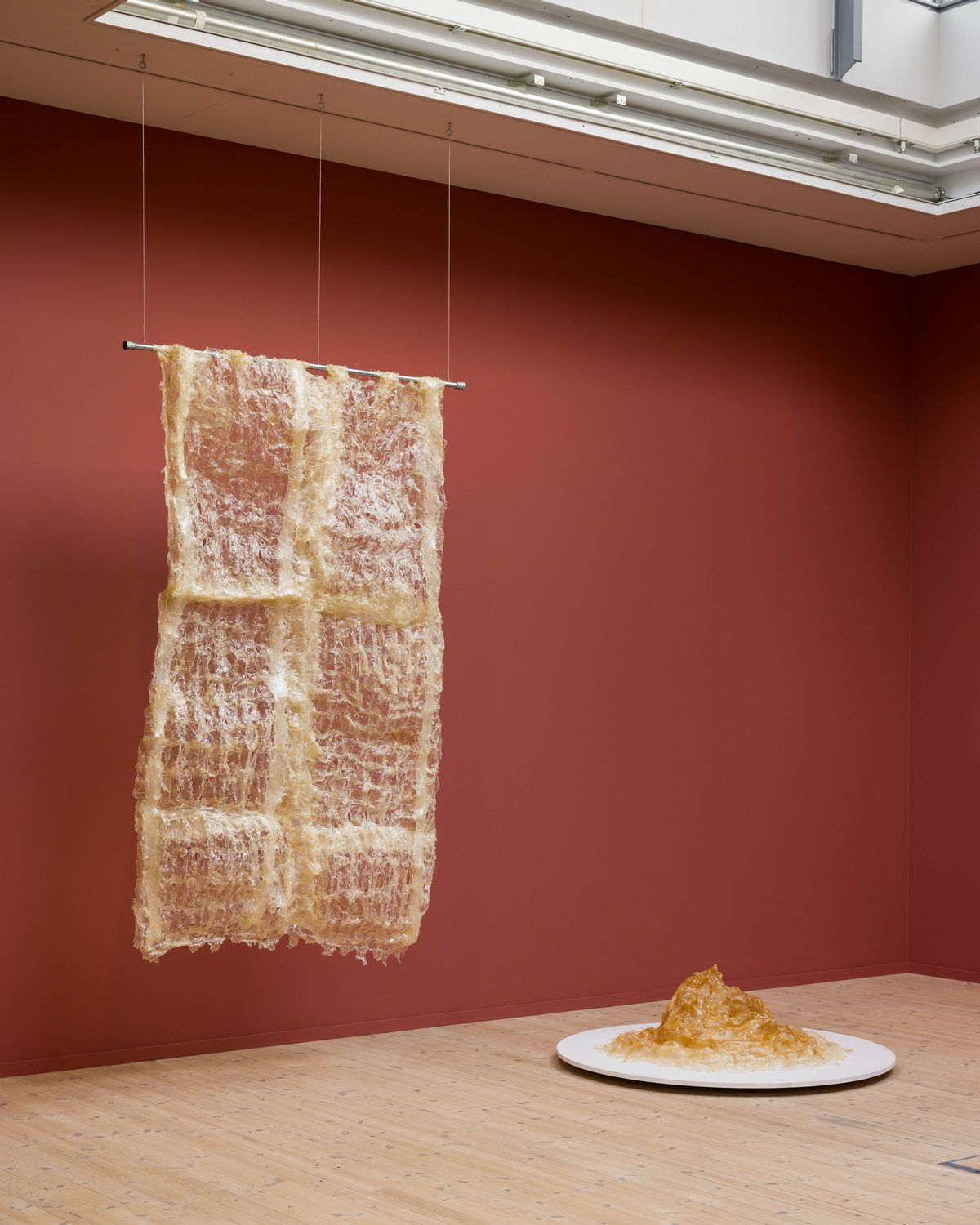
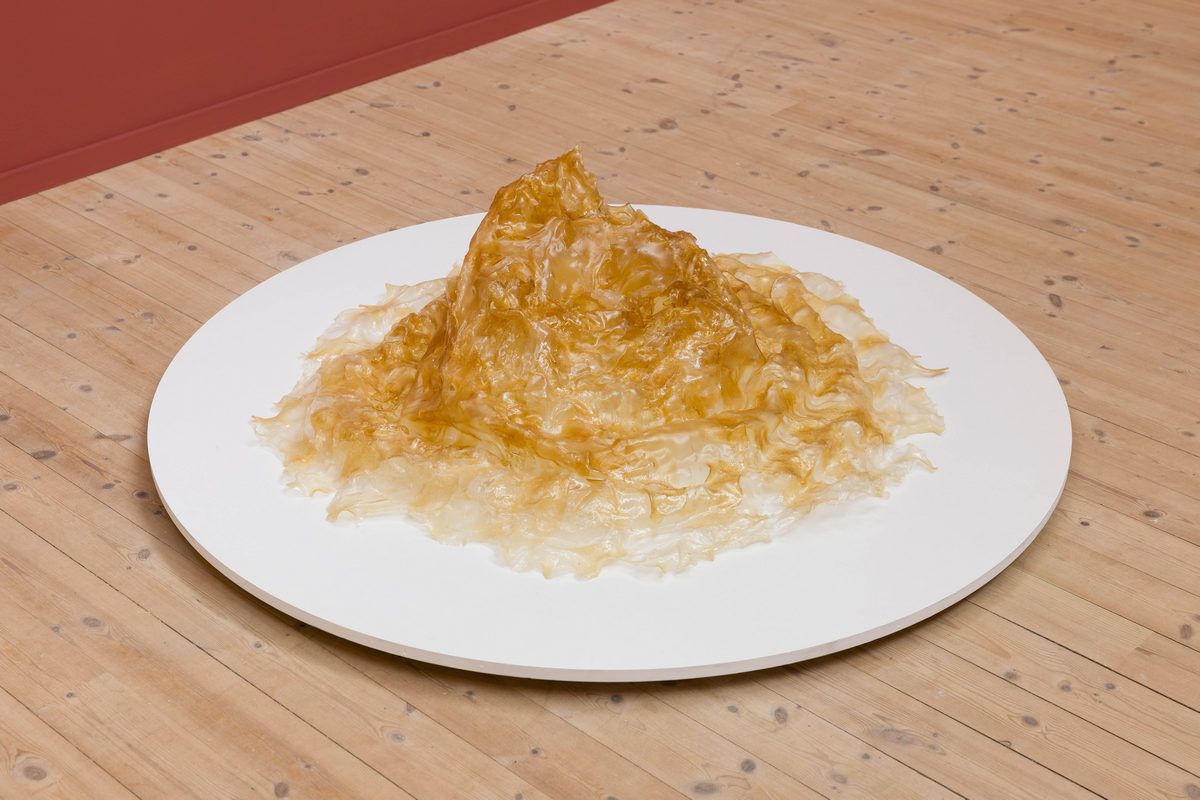
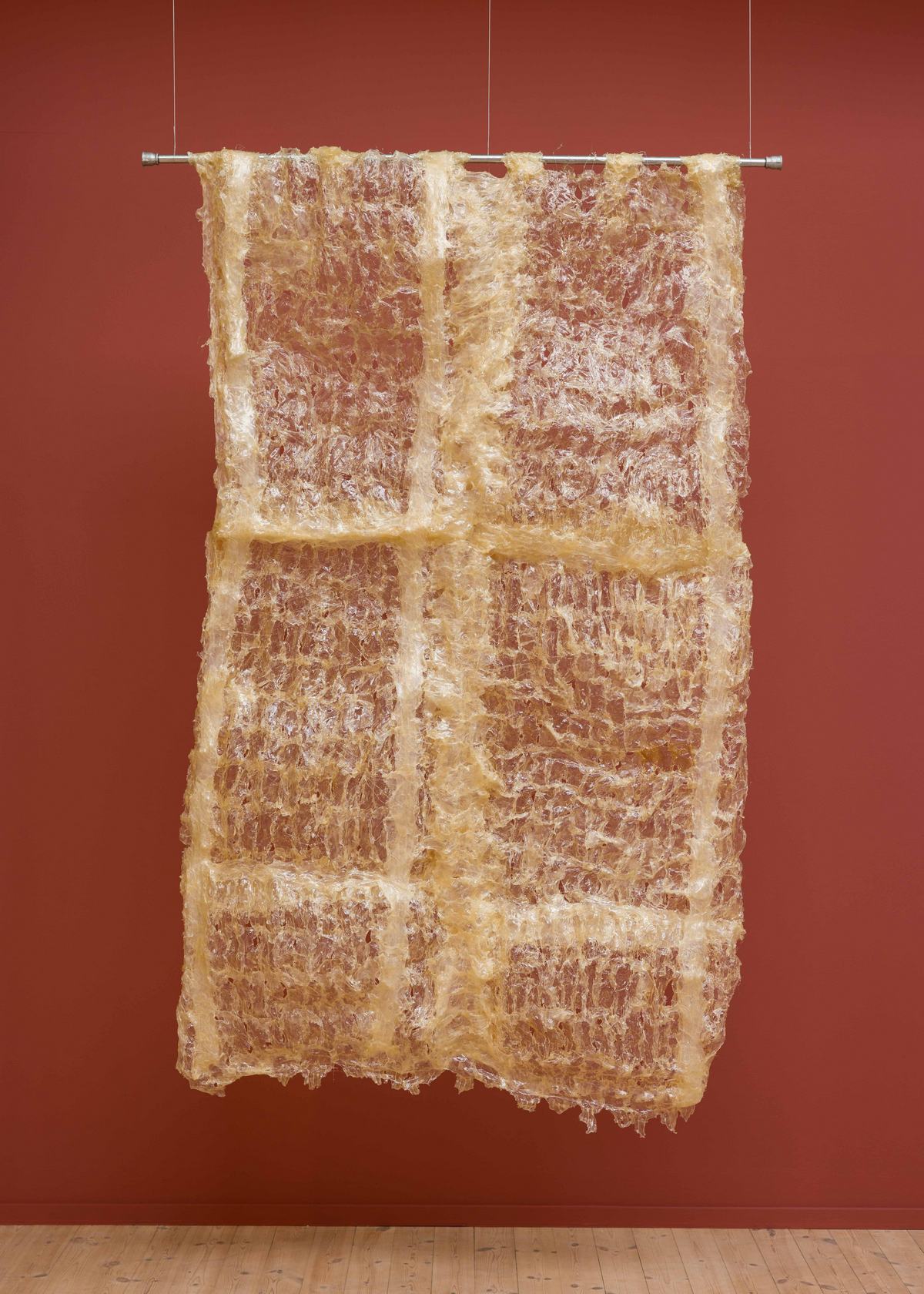
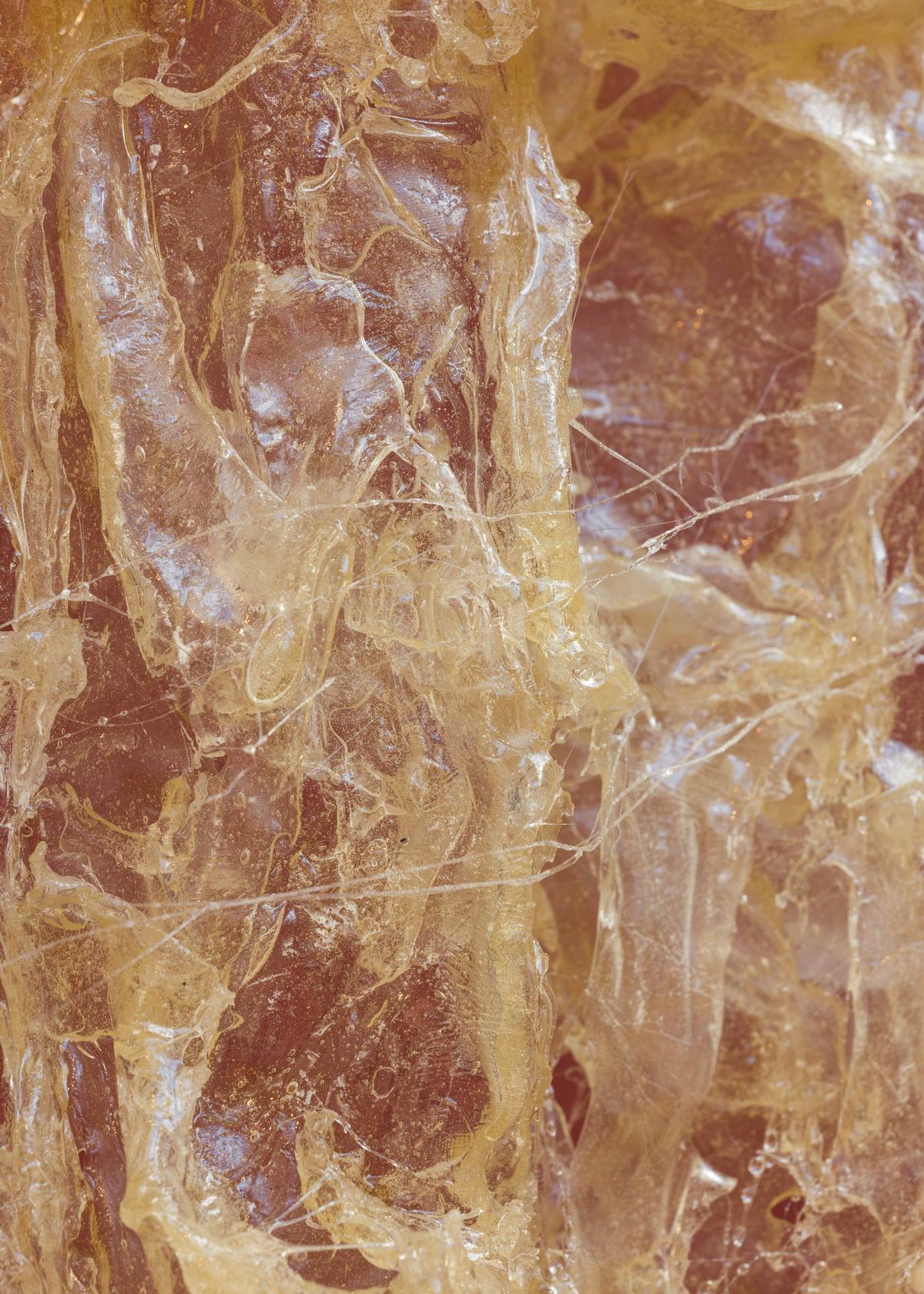
SPRING26_Laura Degn_Tegument in Kunsthal Aarhus_Gelatine, epoxy and iron tube, 235 x 150 x 5 cm / 50 x 120 cm.
Photos: Mikkel Kaldal
Laura Degn
Tegument
Laura Degn’s artistic practice spans a range of media and materials. She works in drawing, painting, sculpture, video and installation, moving freely between these forms as her studies necessitate. The work is unified not by a specific medium but by a consistent fascination with the body as an unstable, permeable phenomenon. A place where boundaries are continually shifting between inner and outer, between the living and the separated.
In Degn’s work, the body is seldom a stable entity. It is dismantled into fragments, surfaces, hybrids and remains. What was once part of a living organism now appears as something detached and ambiguous, recognisable, yet impossible to identify clearly. The body is not depicted directly, but rather processed, deconstructed and reassembled into new, often fluid forms.
This approach situates Degn within the tradition of Abject Art, which views the body as restless and transgressive rather than idealised. In her work, the abject is not a shocking spectacle but rather a fundamental condition. It offers a subtle confrontation with what occurs when the body’s parts, traces and excretions seep out of their natural context. Her works capture a unique intensity in the tension between attraction and repulsion.
For SPRING26, Laura presents Tegument, a work that explores skin as both a space of demarcation and a site of connection. The central element is a large, suspended curtain composed of many smaller shapes formed in gelatine, mounted on a curtain rod. The curtain serves both as a practical hanger and a metaphor, functioning as a bodily membrane that distinguishes yet links space, much as skin separates and connects the body with the outside world.
As a curtain, the artwork exists in a familiar, almost domestic context, filtering light, regulating the view and marking transitions. In Tegument, this function is transformed. The curtain becomes a kind of bodily surface; exposed, vulnerable and permeable. The suspended gelatine resembles skin that no longer protects but instead reveals. It creates the impression of someone hanging freely in the room.
The choice of materials is crucial in this respect. Gelatine, which is extracted from animal bones and tissue, exists in a transitional state between living and non-living. When the artist’s own skin impressions are captured in this material, a fusion occurs between the human and the non-human. The work becomes not just an image of a body, but rather a bodily event.
Light plays an active role in the installation. Depending on the angle and distance, the curtain appears dense, transparent or almost immaterial. In some places, the skin’s microscopic structures are visible; in others, the surface structure dissolves and becomes almost invisible. The work eschews a stable form and insists on being experienced in motion, as something one passes by rather than merely observes from a static viewpoint.
In conversation with the hanging curtain, we encounter a piece on the floor made of a darker, amber-coloured gelatine. While the curtain appears stretched and exposed, the floor piece resembles some form of residue, something that has fallen, accumulated and continues to change. Together, these elements create a tension between skin as a boundary and skin as waste, highlighting the contrast between what is suspended and what has been left behind.
In Tegument, Laura examines the body as something that cannot be sustained in its entirety; it exists only through traces, loss and transformation. The curtain, both an everyday object and a bodily metaphor, becomes a symbol of this condition. A layer we are used to pulling back and forth, but which here hangs silent, as exposed, corporeal remains.
Ahmad Siyar Qasimi
Laura Degn (born 1999) Lives and works in Silkeborg (DK).
https://lauradegn.wixsite.com/lauradegn
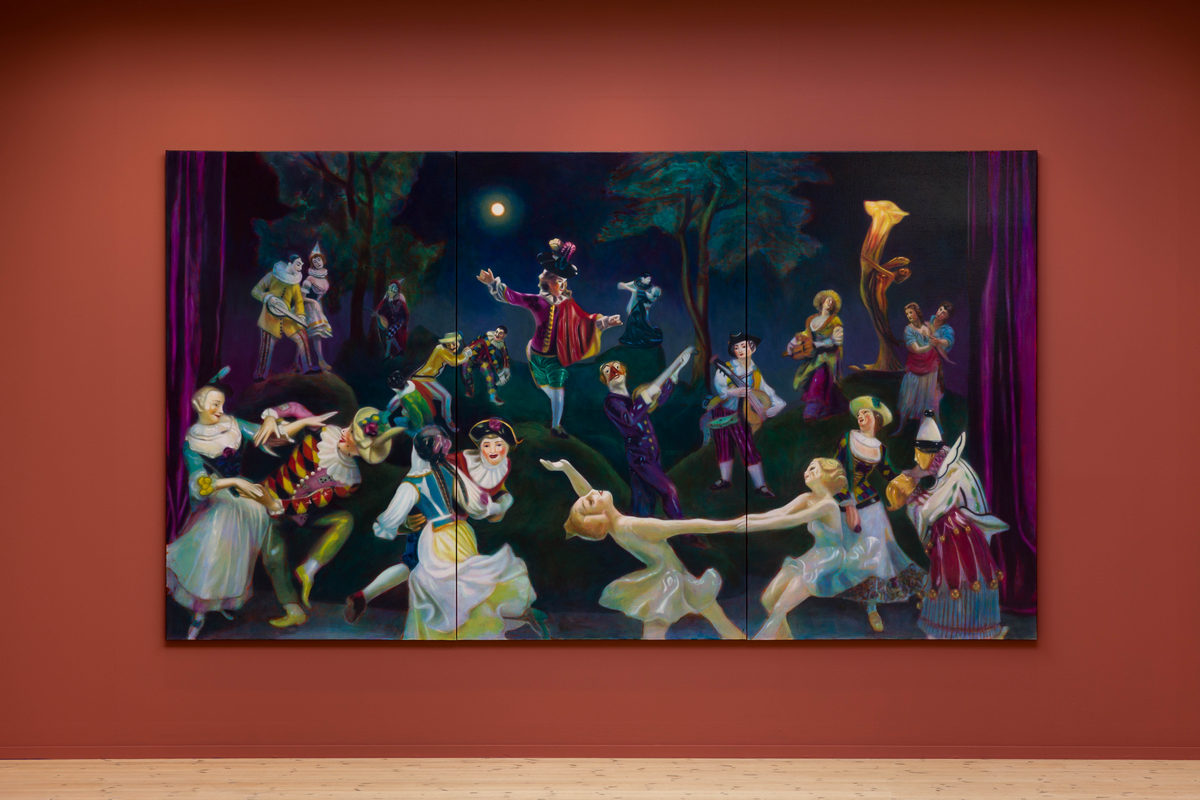
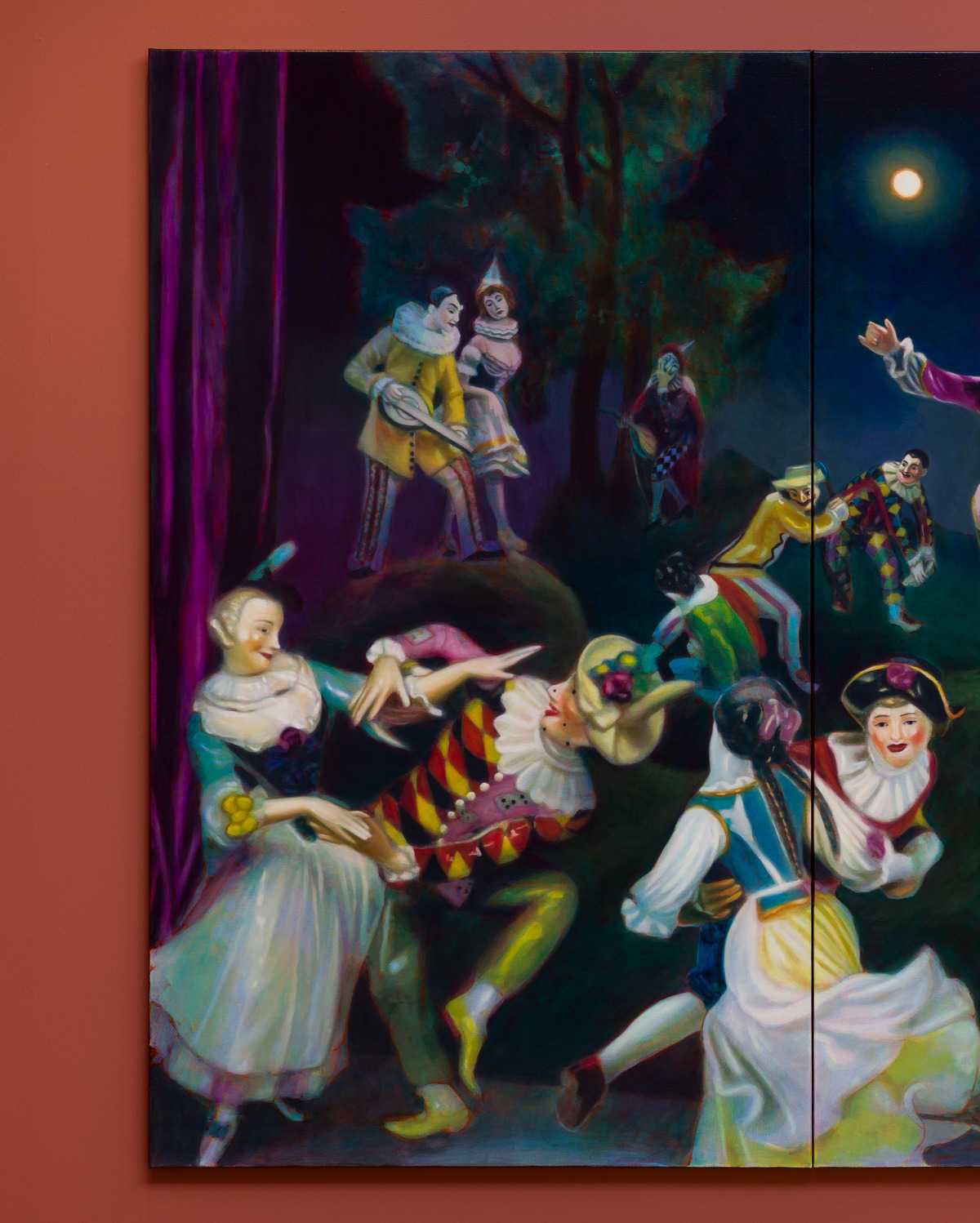
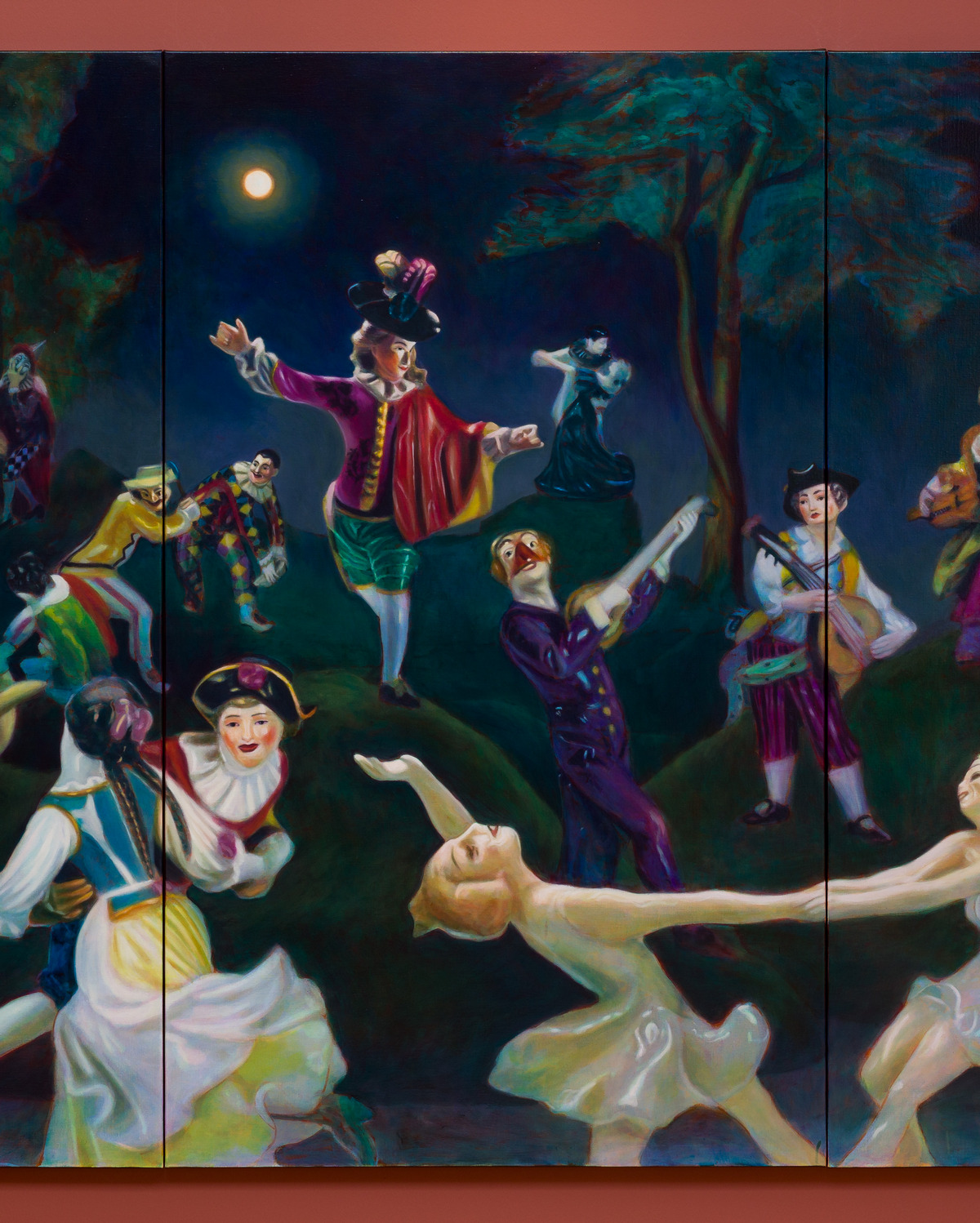
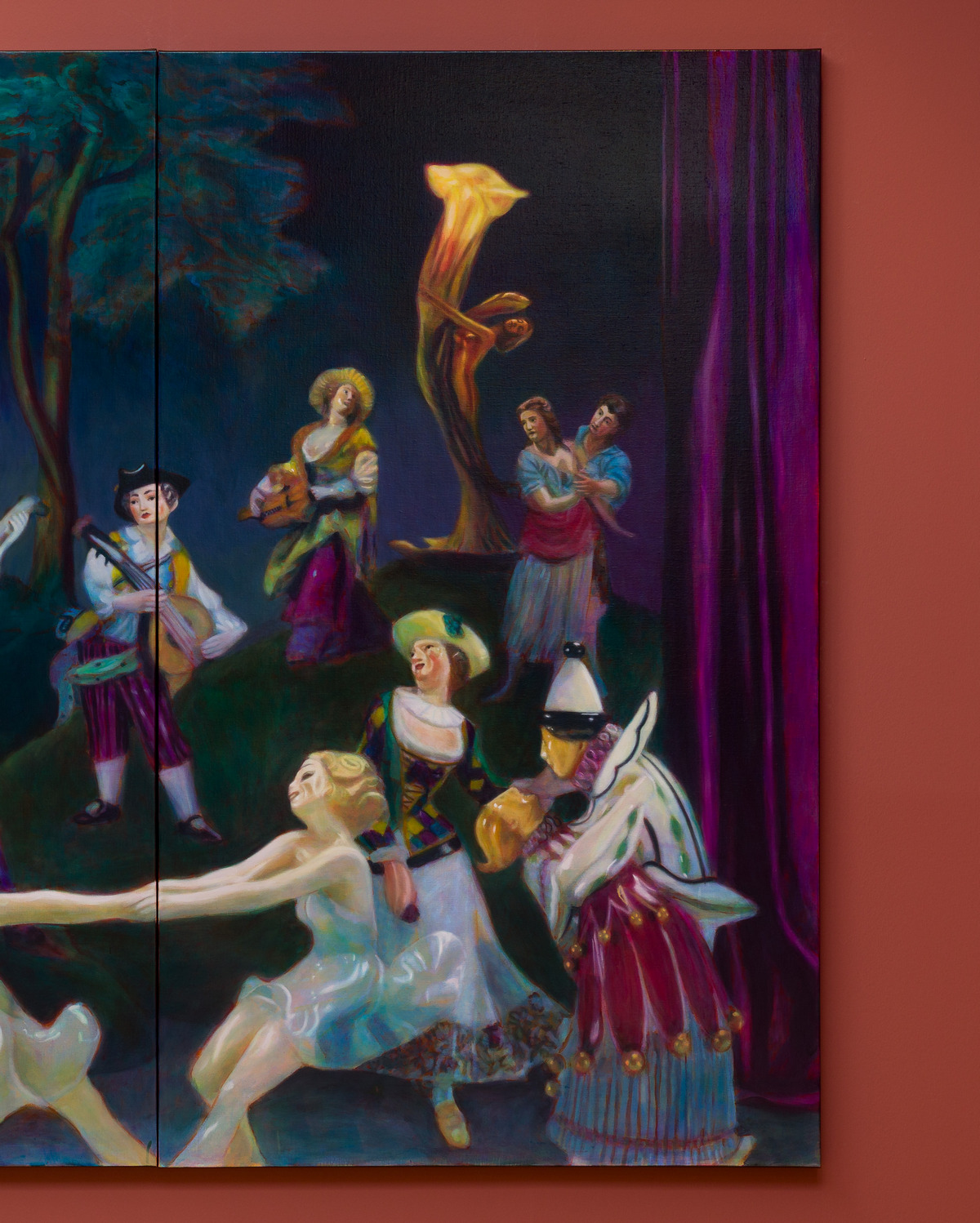
SPRING26_Peter Rolsted_The Opening of the Final Act_Acrylics on canvas, 225 x 399 cm.
Photos: Mikkel Kaldal
Peter Rolsted
The Opening of the Final Act
Peter Rolsted’s artistic practice often draws on personal snapshots and family photographs, which serve as fragments of memory rather than mere documentation. In the transition from photography to painting, the meaning of the images shifts significantly. The specific moment dissolves, and the motif emerges as already distanced. This temporal displacement is a central theme in Rolsted’s work. The painting becomes a space where light preserves memory, not as a straightforward reproduction but as something delayed and processed through multiple layers.
This displacement is also evident in the characters portrayed. The people that populate his paintings are frequently depicted in social settings, but their relationships remain ambiguous and unresolved. There is a sense of physical closeness, yet their eyes and movements do not connect. The group does not appear to be a stable gathering but rather a temporary constellation, held together by circumstance rather than genuine relationships.
Rolsted’s work deliberately draws on the rich narrative traditions of art history, but uses them in an interesting and innovative way. Classical motifs are not reactivated as nostalgic reference points, but as a critical tool for examining contemporary social and psychological structures.
For SPRING26, Rolsted presents a monumental painting that reimagines the bacchanal motif, a theme in art history associated with intoxication, transgression and the temporary suspension of social norms. Historically, bacchanals served as a ritual to let off steam. In Rolsted’s version, the motif is read through the contemporary experience of exhaustion and disillusionment.
In this interpretation, human figures are replaced with small porcelain figurines, marking a clear shift in the artwork’s logic. The body no longer exhibits its direct sensuality; instead, it becomes a kind of prop. The characters seem fragile, idealised, remote and comical, functioning more as miniature representations of social roles than as active individuals. The hedonistic community is depicted as a fabricated, ostentatious display.
The scene is set as a theatrical backdrop. The bacchanal occurs not in a liberating natural setting but in a clearly staged setting. This approach emphasises that the party is not merely an act but a recurring fantasy performance that unfolds continuously. Moonlight and dramatic lighting create an environment that is both seductive and deliberately detached.
Rolsted here refers directly to the Renaissance Bacchanals, including Titian’s The Bacchanal of the Andrians. Whereas the historical models often balanced chaos and order, this version appears more ambivalent. The celebration points not to renewal but to repetition without redemption. Hedonism is not seen as an ideal but as a symptom of a comical situation in which the future is uncertain.
The painting’s baroque composition and saturated colourism hold the viewer’s attention while still maintaining a distance. The rigidity of the porcelain figures and the artificiality of the scenery hinder empathy and underline the work’s tableau character. This festive scene seems more like a temporary pause from external pressures than a genuine celebration.
Rolsted’s The Opening of the Final Act examines the role of the celebration in a period marked by hopelessness and pessimism. The work preserves the bacchanal’s promise of intensity, yet allows it to unfold as a repeated gesture, beautiful, fragile, and with no guarantee for what might follow.
Ahmad Siyar Qasimi
Peter Rolsted (born 1996) Lives and works in Copenhagen (DK).
https://peterrolsted.com/